
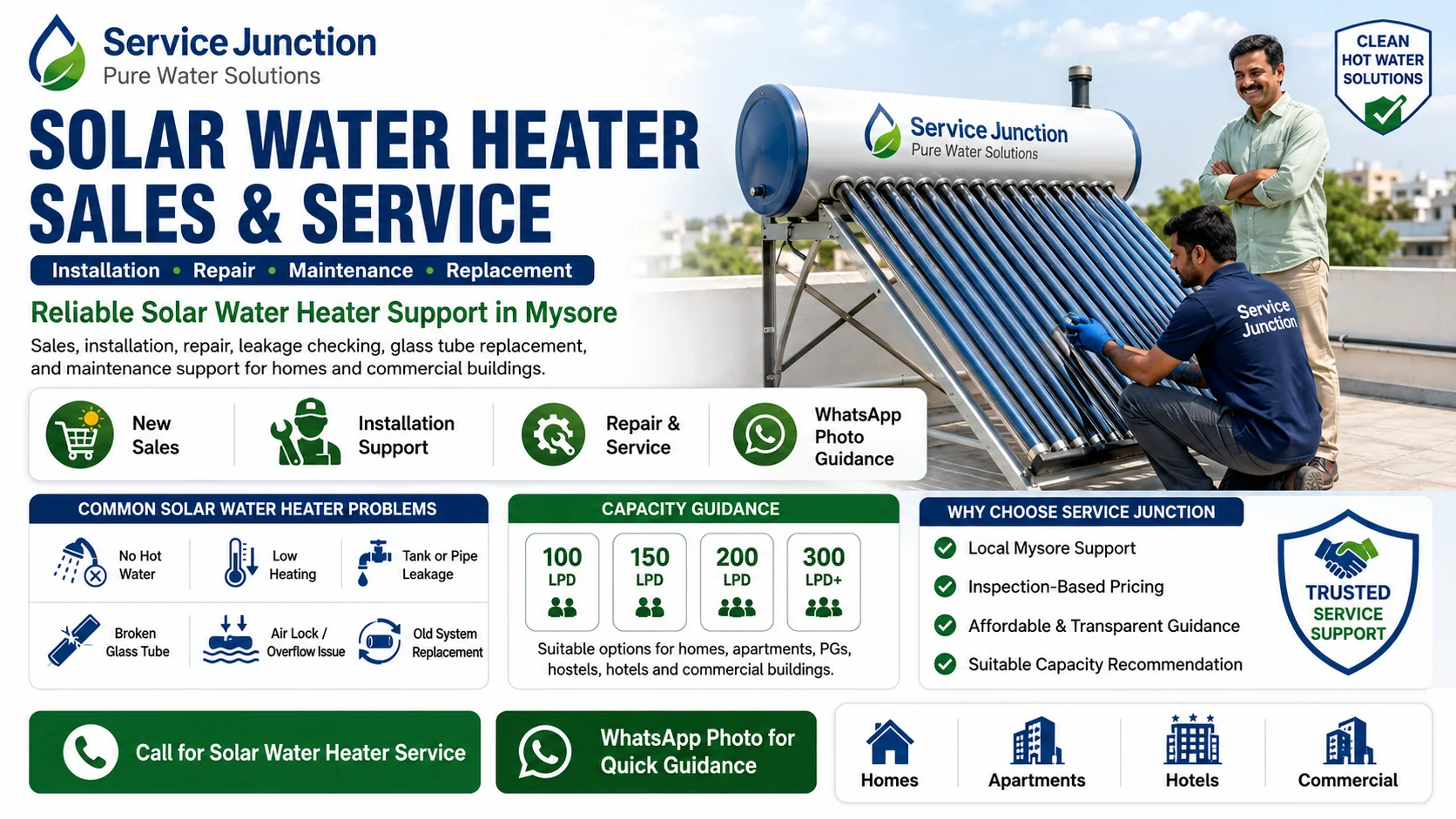
Hot Water Solar System
A hot water solar system helps produce hot water using sunlight, a collector system and an insulated storage tank. It is commonly used for bathing, washing and regular hot-water needs where daily hot water is required without depending only on an electric geyser.
Service Junction helps with hot water solar system sales enquiry, ETC and FPC system guidance, installation support, low heating complaints, no hot water issues, leakage checking, glass tube replacement, tank condition checking, maintenance and old system replacement support.
What Is a Hot Water Solar System?
A hot water solar system uses solar collectors to absorb heat from sunlight and transfer that heat to water. In many systems, hot water naturally rises into the storage tank while cooler water moves toward the collector for heating.
This natural movement is called thermosyphon circulation. It works best when the system is installed correctly, receives enough sunlight and has proper pipe connection between the collector and tank.
ETC and FPC Hot Water Solar Systems
Two common solar hot water system types are ETC and FPC.
ETC systems use evacuated glass tubes to collect solar heat. They are commonly used for domestic hot-water needs and are available in different LPD capacities.
FPC systems use flat plate collectors with absorber plates, insulation and glass covering. They are often preferred where a flat collector design, stronger panel structure or specific water condition requirement is important.
The right system depends on usage, water quality, pressure condition, roof space, budget and maintenance preference.
Choosing the Right LPD Capacity
LPD means litres per day. The correct LPD capacity should match the number of users and daily hot-water demand.
Common options include:
100 LPD for small family use
150 LPD for medium domestic use
200 LPD for higher home usage
300 LPD for large families or shared usage
500 LPD and above for heavy hot-water requirement
If the system capacity is too low, users may face less hot water during peak usage. If the capacity is too high, the purchase and installation cost may increase unnecessarily.
Before Installing a Hot Water Solar System
Installation should be planned after checking the site condition.
Important checks include:
Open roof space
Sunlight exposure
Shade from nearby objects
Roof strength
Stand placement
Tank position
Plumbing route
Hot water outlet line
Cold water inlet line
Overflow and drain arrangement
Distance from roof to bathroom
Access for future service
A wrong installation point can reduce heating performance even when the product is good.
Low Hot Water Output
Low hot water output can happen because of usage, weather, installation or system condition.
Possible reasons include:
High hot-water use during night
Cloudy weather or low sunlight
System capacity lower than demand
Shade falling on collector or tubes
Collector not placed correctly
Air trapped inside the tank or line
Bent or blocked connecting pipes
Cold water mixing with hot water line
Slow leak in plumbing
Dust on collector surface
Broken glass tube
Scaling inside tank or pipes
A step-by-step check is better than replacing parts without finding the real cause.
No Hot Water from Solar System
No hot water usually needs a full system check.
The technician may need to inspect collector exposure, tube condition, pipe connection, tank filling, air vent, valve position, plumbing leak, cold-water mixing and hot-water outlet line.
If electrical backup is connected, the power supply, thermostat and heating coil should be checked only by a qualified person.
Leakage in Hot Water Solar System
Leakage can start from the tank, pipe joints, valve, overflow line, glass tube area, hot water outlet, cold water inlet or old fittings.
Common leakage checks include:
Tank connection
Tube seal
Pipe joint
Valve connection
Drain line
Overflow pipe
Hot water line
Cold water inlet
Stand and roof area below the tank
Leakage should be handled early because it can damage the roof surface, pipeline, tank insulation and nearby electrical points.
Glass Tube and Collector Check
In ETC systems, glass tubes should be checked if heating is weak, a tube is broken, water is leaking, or the system performance has dropped.
Before replacing a tube, check tube size, tube count, rubber seal, tank condition, spare availability and whether other tubes are also weak.
In FPC systems, the collector surface, glass, absorber area, insulation and pipe connections may need checking when heating is poor.
Tank, Anode and Pipe Maintenance
The tank stores heated water, so its condition affects system performance.
Maintenance may include checking:
Tank leakage
Tank insulation
Hot water outlet
Cold water inlet
Anode condition
Pressure relief valve
Air vent
Pipe insulation
Scale formation
Rust or corrosion signs
Heating coil or thermostat, if present
Old tanks with serious leakage or corrosion may not be worth repeated repair.
Repair or Replacement
Repair may be suitable when the issue is minor leakage, broken tube, pipe connection, air lock, valve problem, dust, or service delay.
Replacement may be better when:
Tank leakage is serious
Multiple tubes are damaged
Stand is weak or rusted
Hot-water output is poor even after service
Spare parts are difficult to arrange
System capacity is too low for current usage
Repair cost is close to a new system
A site check helps decide whether repair, service or replacement is practical.
What to Share Before Booking
Before requesting hot water solar system service or sales support, share:
Current system photo, if available
Required hot-water usage
Number of users
Existing capacity, if known
Brand name, if visible
Roof access photo
Current issue
Leakage photo, if any
Broken tube photo, if any
Plumbing distance from roof to bathroom
Whether electrical backup is connected
These details help guide the next step for new system selection, installation, repair, maintenance or replacement.
Call or WhatsApp for Hot Water Solar System Help
Need help with a hot water solar system?
Call or WhatsApp Service Junction and share your requirement, system photo, capacity, brand and issue. Our team will guide the next step for sales, installation, repair, leakage checking, glass tube replacement, maintenance or old system replacement.
FAQs
What is a hot water solar system?
A hot water solar system uses sunlight, collectors and a storage tank to heat water for bathing, washing and daily hot-water use.
What is the difference between ETC and FPC systems?
ETC systems use evacuated glass tubes. FPC systems use flat plate collectors with absorber plates and glass covering. The right option depends on usage, water quality, roof space and pressure condition.
What LPD capacity do I need?
Capacity depends on the number of users, daily hot-water demand, bathrooms, usage timing and property type. Common choices include 100 LPD, 150 LPD, 200 LPD, 300 LPD and 500 LPD.
Why is my solar system giving less hot water?
Low hot water may happen due to cloudy weather, shade, high usage, wrong capacity, air lock, bent pipes, leakage, cold-water mixing, scaling or collector damage.
Can leakage in a hot water solar system be repaired?
Leakage can often be repaired if it comes from pipe joints, valve connection, tube seal or fittings. Tank leakage depends on the damage level.
When should glass tubes be replaced?
Glass tubes should be replaced if they are broken, cracked, leaking or not supporting proper heating.
Is maintenance required?
Yes. Maintenance helps check collector condition, tube damage, leakage, tank, pipe insulation, air lock, valve condition and hot-water output.
Should I repair or replace an old system?
Repair is better for minor problems. Replacement may be better if the tank is damaged, stand is unsafe, heating is weak, or repair cost is high.