
Best Solar Installers Near Me
Searching for best solar installers near me usually means you need a proper solar water heater installer who can check roof space, sunlight exposure, system capacity, tank position, pipe route, leakage risk and future service access before installation.
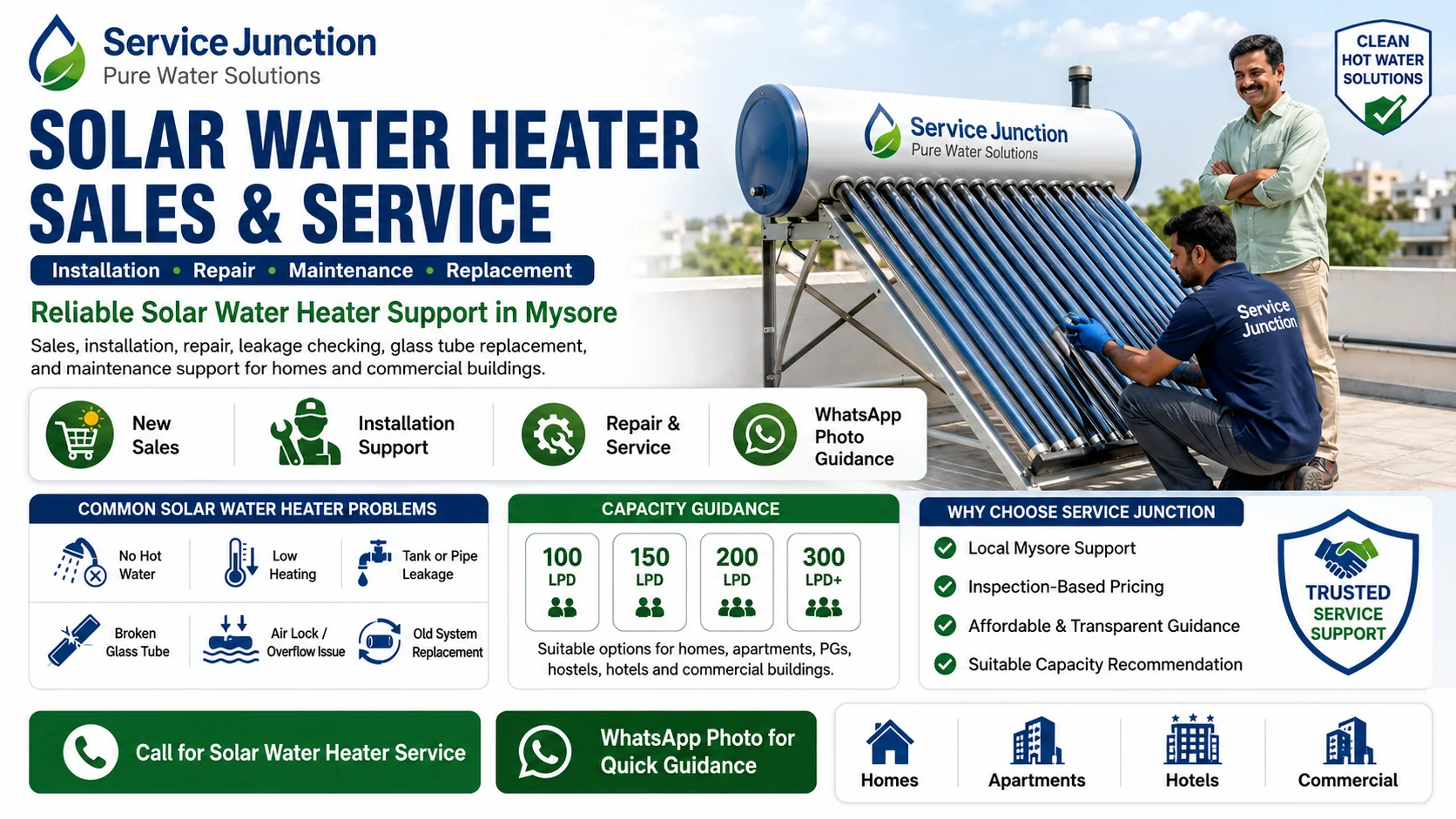
Service Junction helps with solar water heater installation enquiry, ETC and FPC setup guidance, LPD capacity selection, rooftop installation support, pipe connection checking, leakage checking, old system replacement and post-installation working check based on actual site condition.
What a Solar Installer Should Check First
A solar water heater should not be installed only by looking at product capacity. The installer should check the roof, plumbing and usage requirement before fixing the system.
Important checks include:
- Roof space
- Roof strength
- Safe roof access
- Sunlight exposure
- Shade from nearby objects
- Tank placement area
- Collector direction
- Stand fixing area
- Cold water inlet line
- Hot water outlet line
- Overflow line
- Air vent arrangement
- Pipe route to bathroom
- Space for future service
Poor roof planning can create low heating, leakage, weak hot-water flow and repeated service issues.
ETC Solar Water Heater Installation
ETC solar water heaters use evacuated glass tubes for heat collection.
During ETC installation, the installer should check:
- Tube count
- Tube size
- Rubber seal condition
- Tank level
- Tube seating
- Cold water inlet
- Hot water outlet
- Air vent
- Overflow line
- Stand alignment
- Leakage after filling
Glass tubes should be handled carefully. Wrong seating, forceful fitting or damaged seals can cause leakage near the tank.
FPC Solar Water Heater Installation
FPC solar water heaters use flat plate collectors with absorber plates, glass covering and insulation.
During FPC installation, the installer should check:
- Collector placement
- Panel support
- Collector angle
- Tank connection
- Pipe insulation
- Hot water outlet
- Cold water inlet
- Valve condition
- Collector surface safety
- Leakage after filling
FPC installation needs proper pipe routing and collector support because poor installation can reduce hot-water output.
LPD Capacity Selection
LPD means litres per day. The installer should help select capacity based on real hot-water requirement.
Common capacity options include:
- 100 LPD for small family use
- 150 LPD for regular domestic use
- 200 LPD for higher home usage
- 300 LPD for larger usage
- 500 LPD and above for heavy hot-water requirement
A small capacity system may finish hot water quickly. A larger system may need more roof space, stronger support and higher installation cost.
Roof Placement and Direction
Solar collectors need open sunlight to work properly. If the system is installed in a shaded area, heating may remain weak even if the product is new.
Before fixing the stand, the installer should check:
- Morning and afternoon shade
- Nearby wall height
- Tree shadow
- Nearby building shadow
- Roof-edge safety
- Collector angle
- Tank height
- Service access around the unit
Correct placement helps reduce low-heating complaints after installation.
Plumbing and Pipe Connection
Plumbing work decides how well hot water reaches the bathroom or usage point.
The installer may need to connect:
- Cold water inlet
- Hot water outlet
- Overflow line
- Air vent pipe
- Drain line
- Existing hot-water pipe
- Bathroom hot-water line
- Pipe insulation
- Valves and fittings
Wrong plumbing can cause cold water mixing, air lock, leakage, weak flow or poor hot-water output.
Leak Check After Installation
After installation, the system should be filled and checked for leakage.
Leakage should be checked at:
- Tank connection
- Hot water outlet
- Cold water inlet
- Glass tube seal
- Collector connection
- Pipe joints
- Valve fittings
- Overflow line
- Drain line
- Air vent pipe
A leak check is important before regular use because even a slow leak can affect roof surface, tank insulation and hot-water performance.
Old Solar Water Heater Replacement
Many customers search for installers when an old solar water heater needs replacement.
Before replacing an old system, the installer should check:
- Old tank condition
- Old stand strength
- Broken tubes
- Collector damage
- Existing leakage points
- Old pipe route
- Roof surface condition
- Whether old capacity was enough
- Whether plumbing correction is needed
- Safe removal access
If old plumbing is weak, new installation may also face leakage unless correction is done.
Common Installation Mistakes
Avoid installers who ignore basic site checks.
Common mistakes include:
- Installing in shade
- Choosing wrong capacity
- Weak stand fixing
- Tank not level
- Tube not seated properly
- Poor collector direction
- No pipe insulation
- Loose pipe joints
- Hot and cold line mixing
- No proper air vent
- No post-installation leak check
- Poor service access around the system
These mistakes can create complaints even when the solar water heater quality is good.
Electrical Backup Safety
Some solar water heaters include electrical backup.
If electrical backup is connected, heating coil, thermostat and wiring should be handled only by a qualified person. The system should not be switched on without proper water filling and safety checking.
Price Factors for Installation
Solar water heater installation cost can change based on:
- ETC or FPC system type
- LPD capacity
- Roof height
- Roof access
- Stand requirement
- Plumbing distance
- Pipe and fitting work
- Electrical backup requirement
- Old system removal
- Leakage correction
- Site condition
- Labour requirement
Final price should be confirmed after checking roof, plumbing and installation work.
What to Share Before Booking
Before searching for best solar installers near me and booking support, share:
- Roof photo
- Roof access photo
- Required hot-water usage
- Number of users
- Preferred capacity, if known
- Existing system photo, if replacing
- Distance from roof to bathroom
- Water tank position
- Plumbing line photo, if available
- Whether ETC or FPC is preferred
- Whether electrical backup is required
These details help guide the correct installation plan before technician visit.
Call or WhatsApp for Solar Installer Support
Searching for best solar installers near me?
Call or WhatsApp Service Junction and share your roof photo, hot-water requirement, preferred capacity and existing system photo if any. Our team will guide the next step for solar water heater installation, old system replacement, pipe connection, leakage check and working test.
FAQs
What should I check when searching for best solar installers near me?
Check whether the installer can inspect roof space, sunlight exposure, capacity requirement, plumbing route, tank placement, leakage risk and after-installation service support.
What is included in solar water heater installation?
Installation may include stand fixing, tank placement, ETC tube or FPC collector setup, cold water inlet, hot water outlet, overflow line, air vent, pipe connection, leakage check and working test.
Which is better for installation, ETC or FPC?
ETC and FPC both can be suitable depending on water quality, pressure condition, roof space, usage and budget. The right choice should be made after checking site condition.
Why is roof checking important before installation?
Roof checking is important because the system needs sunlight, safe access, proper load support, service space and correct collector placement.
Can wrong installation cause low hot water?
Yes. Low hot water can happen due to shade, wrong capacity, poor pipe insulation, cold-water mixing, air lock, loose pipe joints or wrong collector placement.
Can an old solar water heater be replaced?
Yes. Old systems can be replaced after checking tank, tubes, collector, stand, pipe line, roof access and capacity requirement.
Should leakage be checked after installation?
Yes. Leakage should be checked after filling the tank and connecting the pipes, tubes, valves and overflow line.
What details should I share before booking?
Share roof photo, roof access photo, number of users, hot-water requirement, preferred capacity, existing system photo if any and electrical backup requirement.